


article
Doppler ultrasound: vascular examination in medical imaging

Principles and techniques of Doppler ultrasound
Doppler ultrasound is a medical imaging examination that uses ultrasound waves to observe blood circulation in the arteries and veins in real time.
Non-invasive and commonly performed in radiology, it helps detect certain vascular pathologies and analyze the functioning of blood vessels.
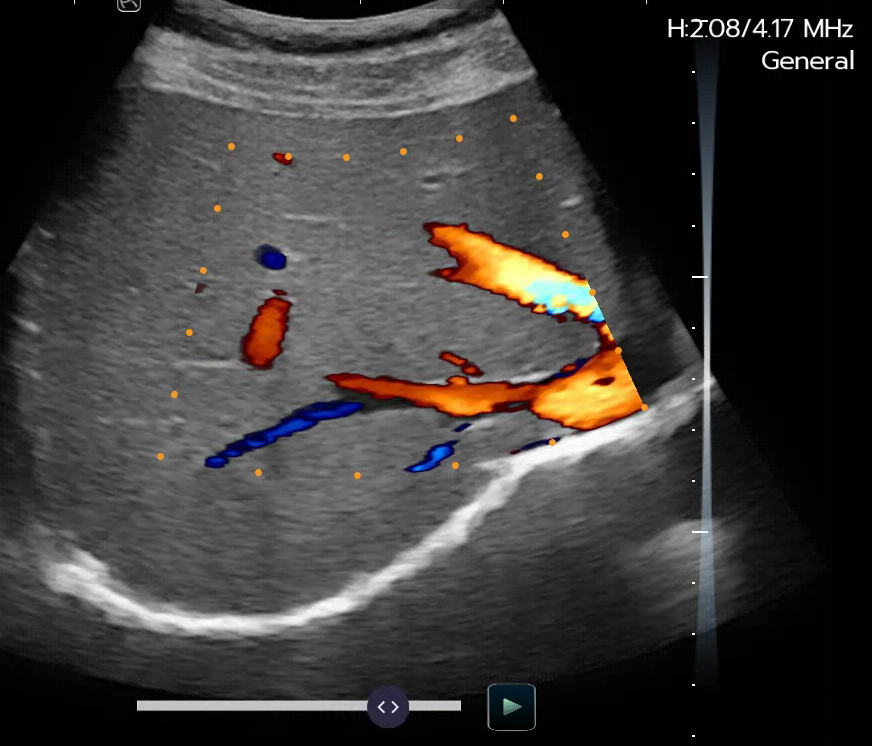
Doppler examination of the liver using a Sonoscanner ultrasound machine
The physical principle of Doppler ultrasound
The Doppler is based on a physical phenomenon called the Doppler effect. When ultrasound waves encounter a moving element, such as red blood cells in the blood, the frequency of the reflected signal changes. This variation makes it possible to analyze the speed and direction of blood flow within a vessel.
During an ultrasound examination, an ultrasound probe is placed on the patient’s skin. The probe emits ultrasound waves that pass through tissues and are reflected by the internal structures of the human body. The device then analyzes these signals to produce an image on a screen.
Thanks to this medical imaging technique, the physician can observe blood circulation in an artery or a vein and identify a narrowing, an obstruction, or a vascular abnormality.
The equipment used for a Doppler examination
Doppler ultrasound requires a medical imaging device equipped with a specialized probe capable of emitting and receiving ultrasound waves. In an imaging center or radiology department, this device provides a dynamic image of blood flow.
Modern technologies now make it possible to use compact devices such as a portable ultrasound, which offers high precision while improving access to the examination in various medical settings.
The images produced by Doppler ultrasound can be analyzed in real time to assess blood flow rate, circulation speed, or the presence of a vascular condition. The device can also display color coding to distinguish different blood flows.
How is a Doppler ultrasound examination performed?
Doppler ultrasound is a simple examination that can be performed in a medical office, radiology center, clinic, or hospital. In most cases, no special preparation is required.
The patient is positioned on an examination table. The physician applies a gel to the skin to improve the transmission of ultrasound waves between the probe and the body surface. The probe is then moved over the area being examined, for example the neck, legs, or abdomen.
During the examination, the device analyzes blood circulation within the blood vessels. The information appears on the screen as images and signals that make it possible to measure blood flow velocity.

The duration of the examination generally varies between fifteen and thirty minutes. At the end of the procedure, the radiologist may provide a report to help guide diagnosis or treatment.
Main medical indications for Doppler ultrasound
Doppler ultrasound is used to investigate many vascular conditions. It is particularly useful for diagnosing deep vein thrombosis, arterial stenosis, or venous insufficiency.
This examination is also used to assess varicose veins, check blood circulation in the lower limbs, or detect a blockage in a blood vessel. In some cases, Doppler ultrasound is requested to monitor the progression of a vascular disease or evaluate the effectiveness of a medical treatment.
L’évolution des technologies Doppler
Advances in medical imaging have significantly improved the performance of Doppler ultrasound devices. Modern systems offer higher resolution and make it possible to obtain highly precise images of the vascular system.
Some innovative equipment, such as a handheld ultrasound, makes it easier to use Doppler imaging in different medical settings. These devices can be used in a medical office, in hospitals, or in emergency situations.
For further reading
If you would like to learn more about ultrasound imaging techniques and their applications in medicine, you can consult other articles available on the website.
These contents help deepen knowledge of medical imaging technologies and their uses in clinical practice.

Discover Sonoscanner Ultrasound Devices

U-Lite PRO
Premium Handheld Ultrasound
7″ HD LED touchscreen
Retina+ image quality
AI features
600 grams (1.3 lbs)
3-hour battery life
All Doppler modes, including continuous and transcranial
Instant startup
11 available probes
Cloud storage and automatic reporting

T-Lite PRO
Compact High-Performance Ultrasound
10″ HD LED touchscreen
Retina+ image quality
AI features
1 kg (2.2 lbs)
4-hour battery life
All Doppler modes, including continuous and transcranial
Instant startup
11 available probes
Cloud storage and automatic reporting
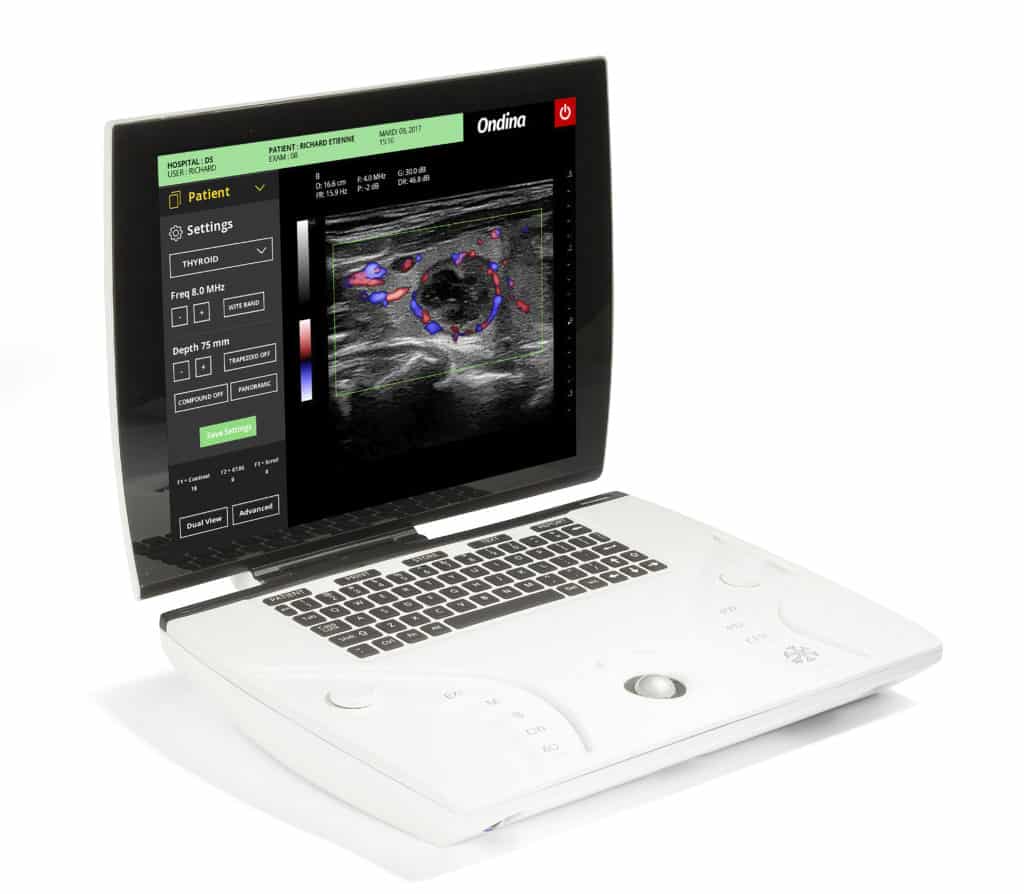
Ondina
Hybrid Portable Ultrasound Platform
15″ Full HD screen
Retina+ image quality
AI features
Hybrid use: touchscreen and keyboard
Fast startup: 20 seconds
Panoramic, elastography, and 3D/4D options
8 available probes
Automatic reporting



