article
Portable ultrasound in 2026: the complete guide to choosing a high-performance mobile imaging solution
Published on May 26, 2026, by Pierre Decavele
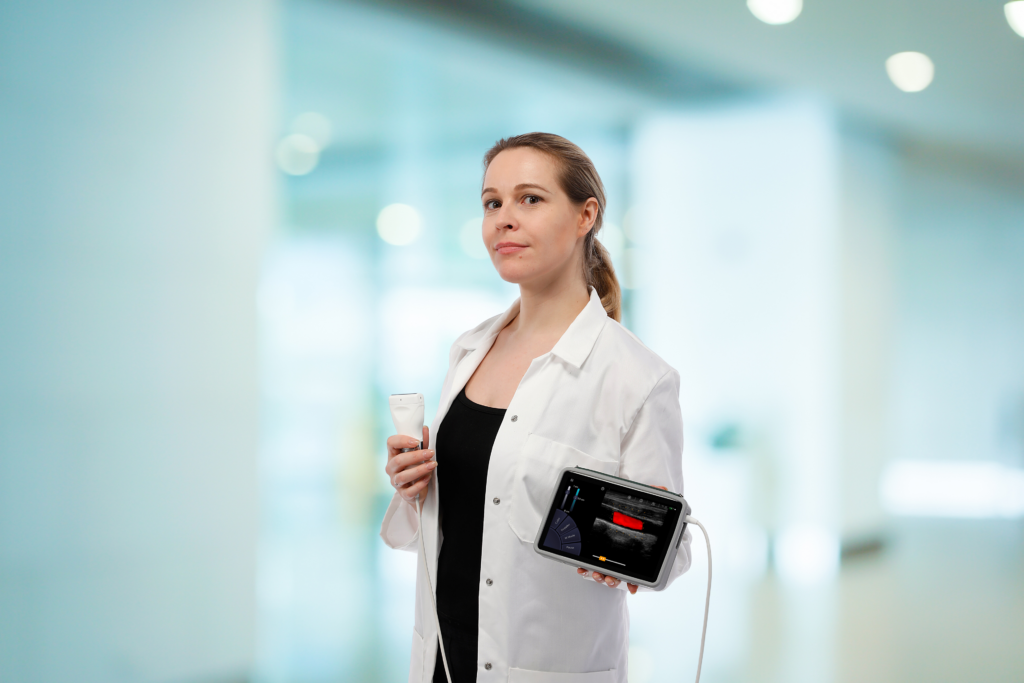
The best portable ultrasound depends on the clinical setting, but for point-of-care use across specialties, Sonoscanner’s U-Lite PRO stands out: a 600 g handheld ultrasound with a 7-inch HD touchscreen, an EU MDR-certified design, full Doppler modes, AI-assisted measurements, and automated reporting, used daily by over 12,400 physicians worldwide.

Portable ultrasound has now become a strategic piece of equipment in healthcare facilities, medical practices, emergency settings, and mobile medicine. In 2026, the evolution of ultrasound imaging is marked by three major trends: device miniaturization, the integration of artificial intelligence, and a dramatic improvement in image quality.
Once reserved for large hospital departments, portable ultrasound is now accessible to many specialties, including general medicine, emergency care, cardiology, anesthesiology, obstetrics, sports medicine, rheumatology, and telemedicine.
This guide helps you understand the differences between ultrasound device formats, essential features, 2026 innovations, and the key criteria for choosing an investment that truly matches your clinical practice.

Why portable ultrasound is transforming medical practice
Ultrasound has become a first-line diagnostic tool in many clinical situations. Unlike imaging techniques that involve radiation, it relies on ultrasound waves and can be repeated safely when used in accordance with medical guidelines.
Recent advances now make it possible to obtain HD-quality images on devices weighing less than one kilogram.
Advantages of a modern portable ultrasound device:
- Full mobility between clinic, home visits, and hospital settings
- Rapid startup for emergency situations
- Immediate point-of-care diagnosis (POCUS)
Reduced time to treatment - Integration of artificial intelligence for automated measurements
- Cloud connectivity and secure sharing of examinations
- Time savings for medical teams
Portable ultrasound has thus become a true extension of the clinical examination.
How does a portable ultrasound device work?
Its operation is based on the emission of ultrasound waves via a probe. These waves pass through tissues and then return as echoes, which are analyzed by the system to create a real-time image.
Depending on clinical needs, several imaging technologies can be used:
B-mode or 2D imaging
The standard in medical ultrasound. It provides a real-time anatomical cross-section.
Color Doppler and pulsed Doppler
Used to analyze blood flow, particularly in cardiology, vascular medicine, and emergency care.
3D and 4D imaging
Widely used in obstetrics and gynecology to visualize anatomical structures in volume, with real-time motion.
Embedded AI
The latest devices integrate artificial intelligence and are capable of automating certain measurements and optimizing image quality.

The different types of portable ultrasound devices in 2026
- Pocket-sized ultraportable ultrasound devices
Compact and lightweight, it can easily be carried in a lab coat or medical bag.
It is particularly well suited for:
- Emergency physicians
- Emergency medical services (EMS)
- General practice
- Home visits
- Rapid triage
- Care in remote or isolated areas
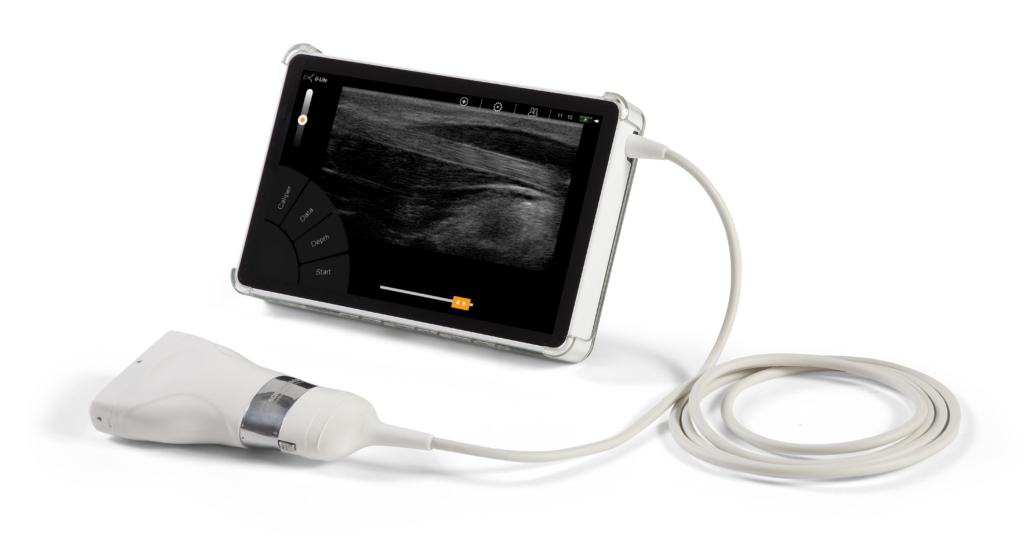
- Tablet-type portable ultrasound
This format is currently one of the best compromises between mobility and performance.
It typically offers:
- A more comfortable HD touchscreen display
- Multiple Doppler modes
- Longer battery life
- Performance close to a cart-based ultrasound system
This type of portable ultrasound is highly valued in:
- General and sports medicine
- Gynecology
- Anesthesiology
- Emergency medicine
- Internal medicine
- Surgery

- Compact cart-based portable ultrasound device
These hybrid systems combine mobility with advanced features.
They are particularly well suited for:
- Specialized clinics
- Hospital departments
- In-depth examinations
- Cardiovascular applications
- Advanced obstetric imaging
Their image quality now closely approaches that of high-end stationary ultrasound platforms.

Comparison of Sonoscanner ultrasound devices in 2026
| Ultrasound | Ultrasound device form factor | Strengths | Recommended use |
|---|---|---|---|
|
U-Lite PRO |
Pocket ultrasound device |
600 g, built-in AI, ultra-fast startup, versatility, built-in AI |
Emergency medicine, general practice, maximum mobility |
|
T-Lite PRO |
Tablet ultrasound device |
10-inch HD large screen, high battery life, advanced Doppler, built-in AI |
Clinic practice, general and sports medicine, gynecology, POCUS (point-of-care ultrasound) |
|
Ondina |
Premium portable ultrasound device |
15-inch Full HD display, 3D/4D options, elastography, advanced AI |
In-depth imaging, specialized clinic, hospital |
The U-Lite PRO and T-Lite PRO devices feature embedded AI that enables the automation of certain measurements and automatic image optimization.
The Ondina model stands out with more advanced features, a large touchscreen display, and 3D/4D options…
Which model should you choose?
U-Lite PRO
The U-Lite PRO is the best choice for practitioners looking for an ultra-light portable ultrasound device capable of supporting intensive mobile practice.
T-Lite PRO
The T-Lite PRO offers an ideal solution for physicians seeking an excellent balance between mobility, visual comfort, and imaging quality.
Ondina
The Ondina is better suited for facilities requiring comprehensive examinations and advanced image quality close to a stationary system.

Main applications of a portable ultrasound device
Emergency medicine and critical care
Portable ultrasound significantly speeds up medical decision-making through FAST exams, vascular access guidance, and rapid cardiac assessment.
Obstetrics and gynecology
New generations of portable ultrasound devices enable high-resolution examinations with Doppler and volumetric imaging.
Cardiology
Mobile echocardiography is experiencing strong growth thanks to more precise Doppler technologies and AI-based tools that assist with measurements.
Musculoskeletal medicine
MSK ultrasound is now essential in sports medicine, image-guided injections, and soft tissue assessment.
General medicine, geriatrics, pediatrics
Point-of-care ultrasound is gradually becoming a standard in many clinical practices.
Essential criteria for choosing a portable ultrasound device
- Image quality
This is the number one criterion.
A good portable ultrasound device should offer:
- Excellent resolution
- High-performance Doppler
- Good depth of penetration
- Stable real-time imaging
2. Mobility
Weight, battery life, and startup time are key factors for mobile practice.
3. Available probes
The choice of ultrasound probes determines possible applications:
- Convex probe
- Linear probe
- Phased array probe
- Endocavitary probe
- Microconvex probe
Artificial intelligence
In 2026, AI is becoming a major differentiating factor.
New platforms enable:
- Automated measurements
- Dynamic gain optimization
- Standardization of examinations
Connectivity
A modern portable ultrasound device must integrate easily into the medical workflow:
- DICOM compatibility
- Secure cloud connectivity
- USB export
- Exam sharing
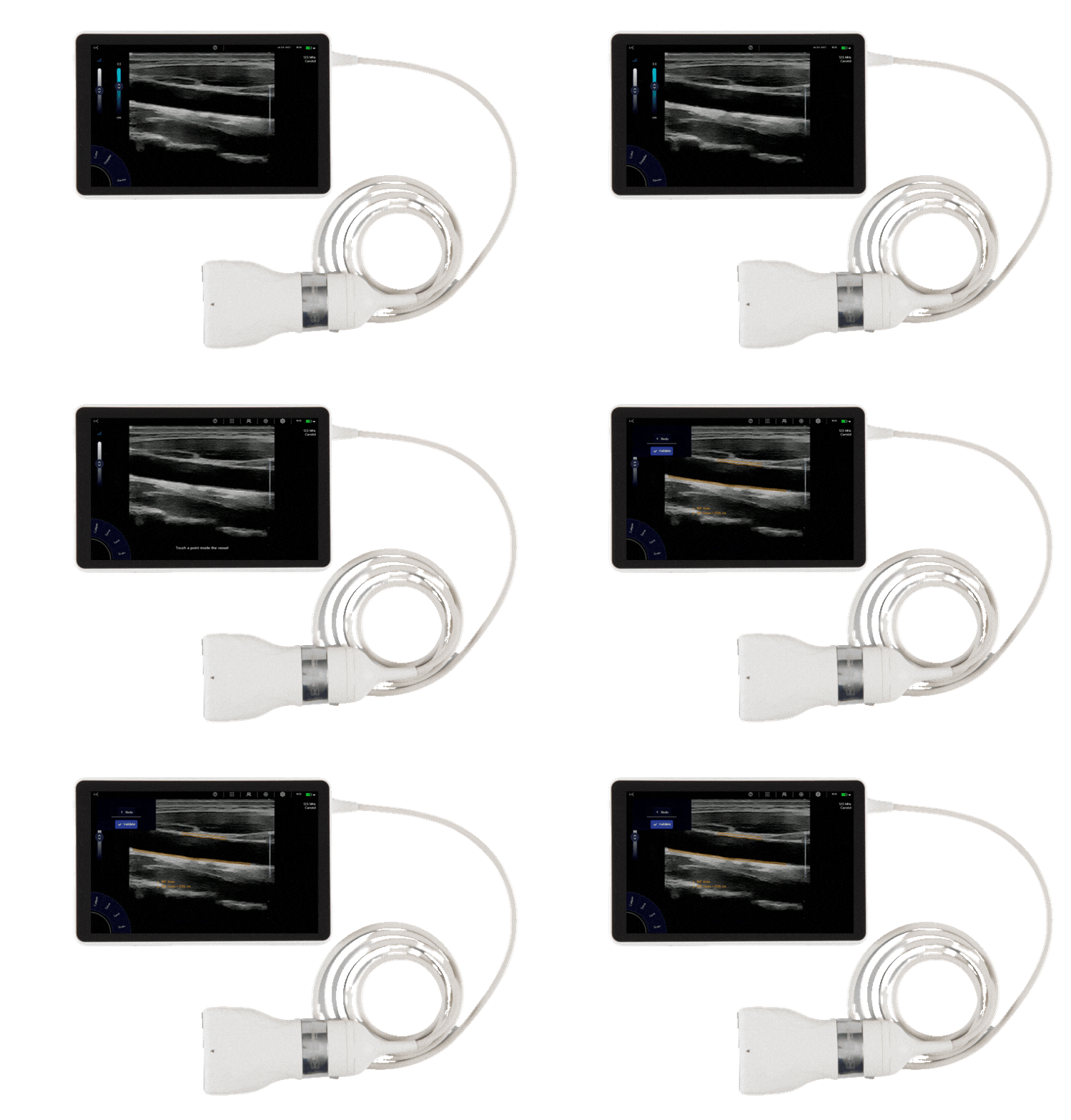
- Automated reporting
Technical support
The quality of after-sales service and training strongly influences the device’s lifespan and adoption.
Major innovations in portable ultrasound devices in 2026
Clinical artificial intelligence
AI now improves:
- Reproducibility of examinations
- Speed of measurements
- Image optimization
- Detection of certain abnormalities
Medical cloud and telemedicine
Secure sharing of examinations facilitates remote expertise and collaboration between healthcare professionals.
Miniaturization
Ultrasound devices are becoming increasingly compact without compromising performance.
Price of a portable ultrasound device in 2026
Prices vary depending on performance and features.
|
Type of equipment |
Estimated price range |
|
Pocket ultrasound device |
€5,000 – €10,000 |
|
Tablet ultrasound device |
€7,000 – €25,000 |
|
Advanced portable ultrasound device |
€20,000 – 60,000 € |
|
High-end 3D/4D system |
€80,000 – € 130 000 |
The total cost must include:
- Probes
- Software licenses
- Maintenance
- Warranty
- User training
Best practices before buying a portable ultrasound device
Before choosing your equipment, it is recommended to:
- Test devices in real clinical conditions
- Check ergonomics with end users
- Compare AI and Doppler features
- Anticipate future needs
- Analyze total cost of ownership
- Evaluate image quality